Understanding Cat Coat Patterns: Smoke, Shaded, and Shell
Distinguishing between Smoke, Shaded, and Shell coat patterns can seem complicated at first, but it is much simpler once you understand the basics.
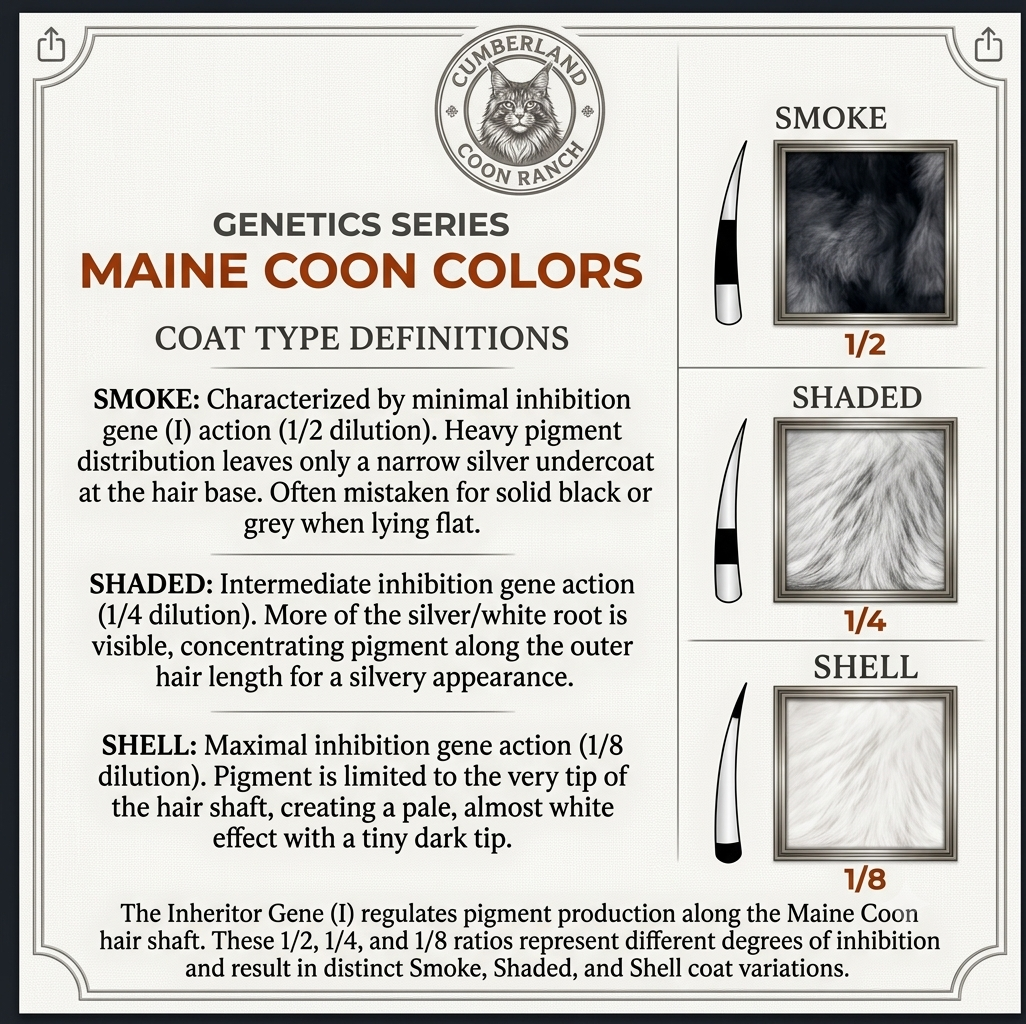
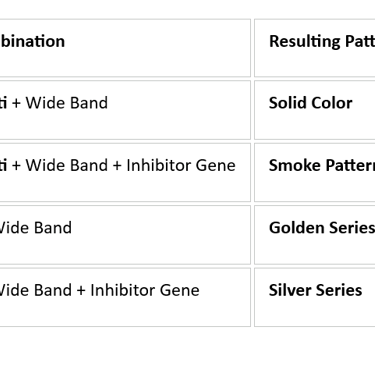
At the core of all three patterns is the inhibitor gene (often called the silver gene). The primary difference between them is simply the amount of color left on each individual hair shaft.
The Tip-to-Hair Ratio
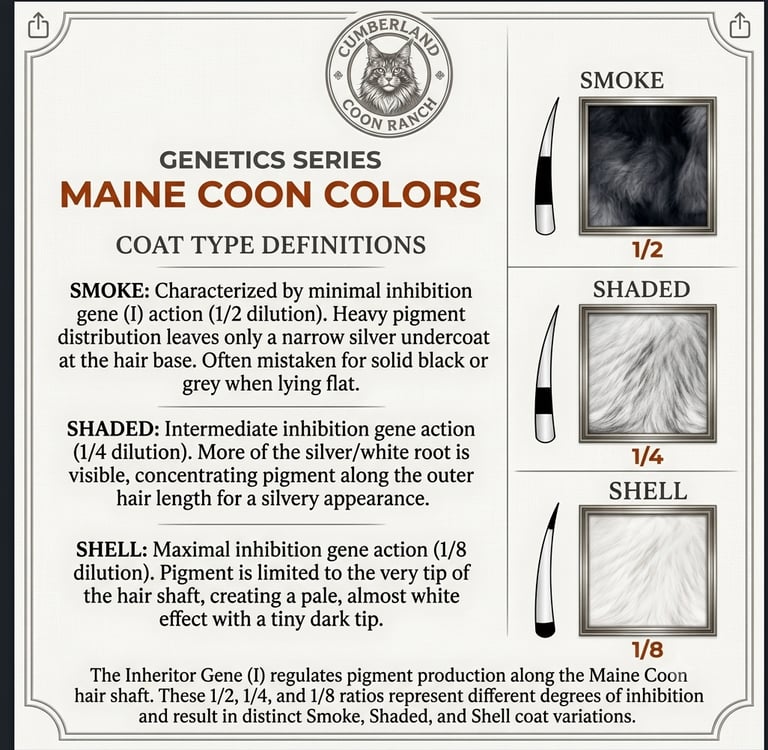
To determine your cat's pattern, look at how much of the hair length is actually colored at the tip:
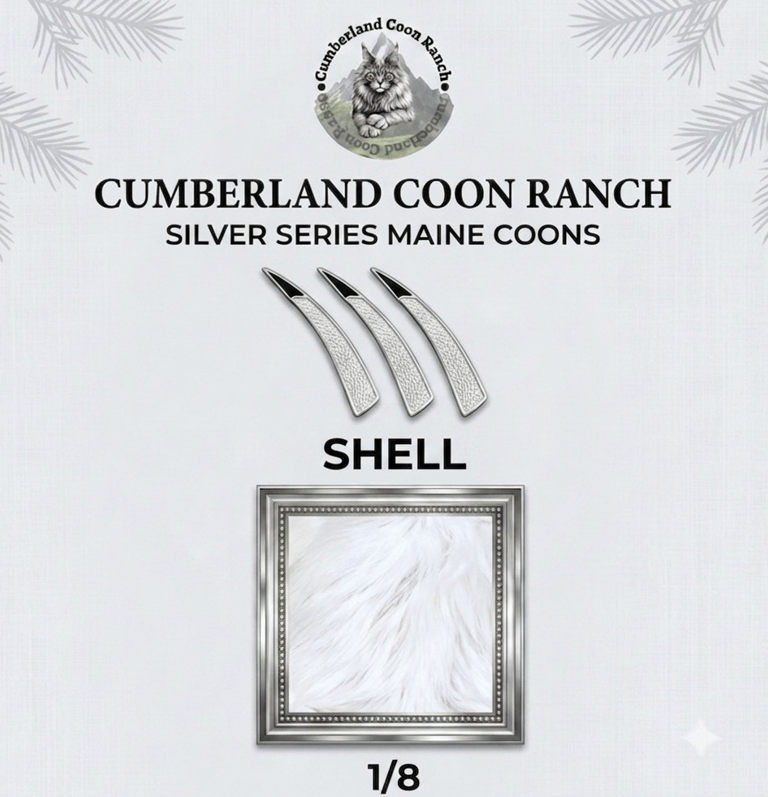
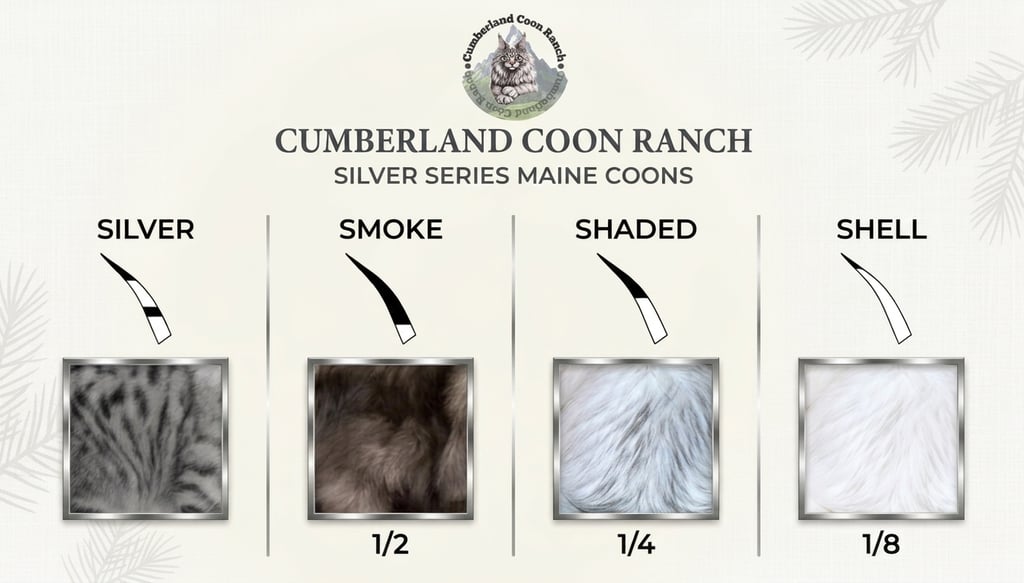
Shell: Only 1/8 of the hair length is colored at the tip.
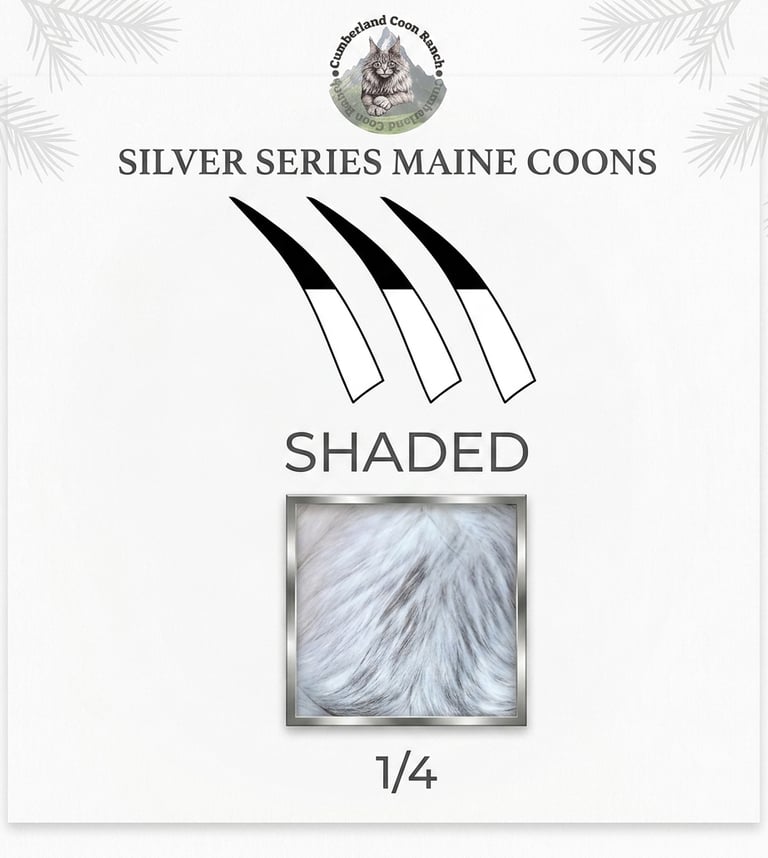
Shaded: 1/4 of the hair length is colored at the tip.
Smoke: 1/2 of the hair length is colored at the tip.
Key Genetic Concepts
1. The Inhibitor (Silver) Gene
The melanin inhibitor gene is dominant. This means a cat cannot be a "silent carrier"—if they have the gene, they will express it. Consequently, a kitten can only inherit this gene if at least one of its parents actively displays it.
Note: The inhibitor gene is much more effective at blocking yellow pigment (phaeomelanin) than black pigment (eumelanin).
2. The "Wide Band" Effect
While breeders often refer to "Wide Band" as a single gene for simplicity, it is actually driven by multiple interacting genes. These genes determine the width of the pale band between the skin follicle and the colored tip.
The Wide Band effect operates independently of the inhibitor gene. For example, a Golden Shaded cat lacks the inhibitor gene entirely but still displays a shading pattern identical to a Silver Shaded cat because of the Wide Band effect.
3. Tarnishing
When the inhibitor gene fails to completely block out warm tones, a breakthrough of reddish color occurs—a flaw known as tarnishing. Because the gene struggles more with red pigments than black, tarnishing is quite common on the muzzles of random-bred silver tabbies. It remains rare in pedigreed silver tabbies due to generations of selective breeding.
Genetic Cheat Sheet
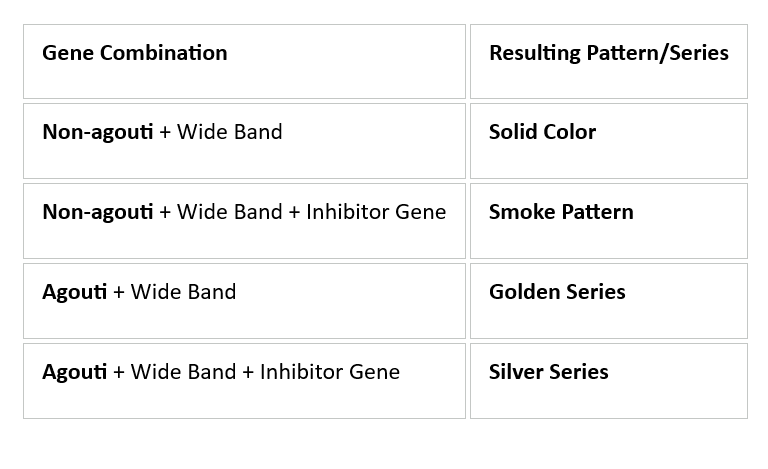
How different gene combinations interact to create specific coat types:
Pro-Tip: An extreme wide-banding effect can sometimes make a "Smoke" cat look like a "Shaded" cat due to the high amount of white. If you aren't sure, check the nose: a solid-colored nose indicates a non-agouti (Smoke) cat. If you want absolute certainty, this can be verified via DNA testing.
Distinguishing Silver, White, and Blue Maine Coons
When looking at Maine Coon kittens, subtle details in their coats, nose leather, and eye outlines can help you precisely identify their color pattern.
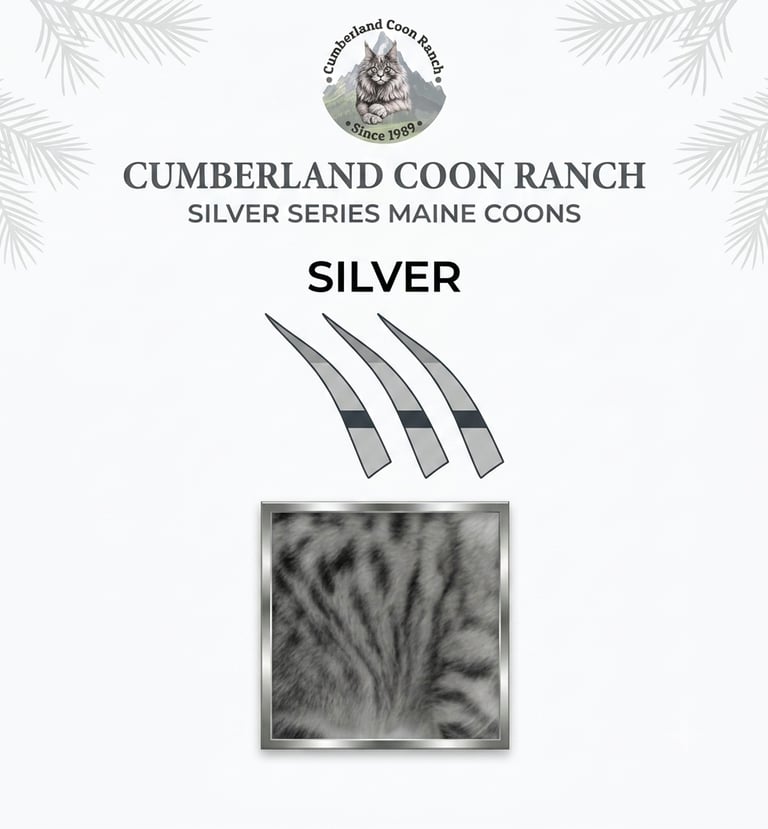
Silver Maine Coons
Eyes: Feature distinct, dark "eyeliner" (a bold black outline surrounding the eyes).
Nose: The nose leather is always a distinct rosy pink or wine color, which is sometimes also framed by black outlining.
White Maine Coons
Eyes: Lack any dark eyeliner around the rims.
Nose & Paws: Feature a very soft, light pink color on both the nose leather and the paw pads.
Blue Maine Coons
Coat: Possess a striking, shimmering coat that can appear almost silver in certain lighting.
Fun Fact: Due to their distinct coloration, they are often beautifully described as a long-haired counterpart to the Russian Blue.
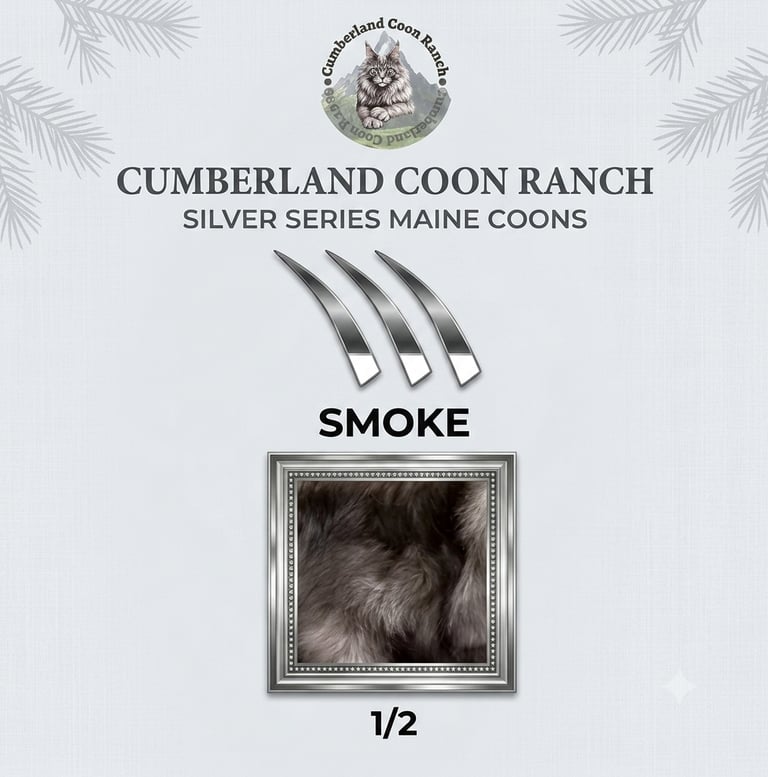
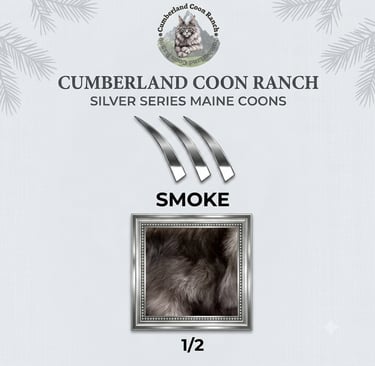
Smoke Maine Coons
A Smoke Maine Coon is genetically a solid-colored cat that carries the dominant inhibitor gene. This gene suppresses pigment production at the base of the hair shaft, resulting in a striking contrast where the hair tips are richly colored (usually black or another solid shade) while the roots near the skin are pale or white.
Key Characteristics of a Smoke Coat
Color Depth: To be classified as a smoke pattern, more than 33% (1/3) of the hair ends must be colored.
Base Color Variations: The inhibitor gene can affect any solid color. When it does, the cat's official color classification becomes "Smoke" plus their underlying solid color.
Common Color Formulas:
Solid Blue + Inhibitor Gene = Blue Smoke Maine Coon
Solid Red + Inhibitor Gene = Red Smoke Maine Coon
The "Kitten Coat" Illusion vs. True Smoke
It is common to mistake a standard solid kitten for a smoke, but genetics tell the real story:
The Illusion: Young, non-smoke kittens often develop a temporary "kitten coat" that is significantly lighter than their true base color, mimicry of a smoke pattern.
The Reality Check: Because the inhibitor gene is dominant, a kitten cannot be a true smoke unless at least one parent is a smoke (possesses the white undercoat).
The Outcome: If neither parent is a smoke, that light kitten coat is temporary and will gradually darken to a solid color as the cat matures.
Shaded Maine Coons
A Shaded Maine Coon features a beautiful, luminous coat defined by a precise amount of color "tipping" on each hair shaft. It occupies the middle ground of the wide-band spectrum—displaying less wide-banding than a Shell pattern, but more than a Smoke pattern.
Key Characteristics
Tipping Ratio: Exactly 33% (or 1/3) of the hair ends are colored, with the remaining root portion being pale or white.
Degree of Shading: Within the Maine Coon breed, this represents the second-lightest degree of tipping.
Cross-Breed Terminology: While Maine Coon standards classify this pattern as "Shaded," you may hear this exact same look referred to as "Chinchilla" in other cat breeds.
The Genetic Formula
The striking look of a Shaded Maine Coon is created by the interaction of two specific genetic traits:
The Inhibitor Gene: Suppresses the color at the base of the hair shaft.
The Wide-Band Effect: Widens the pale band between the skin follicle and the colored tip, restricting the dark pigment to just the top third of the hair.
Shell Maine Coons
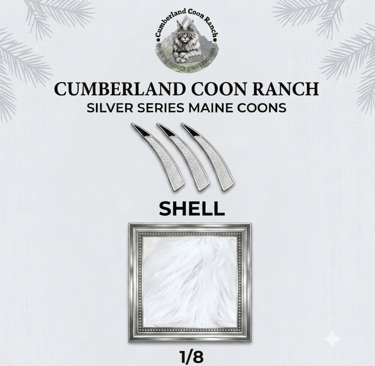
A Shell Maine Coon features the absolute lightest degree of color "tipping" found within the breed, creating a stunning, almost entirely pale or white appearance with just a delicate dusting of color.
Key Characteristics
Tipping Ratio: Only 12% (or 1/8) of the hair ends are colored at the very tip, leaving the remaining 88% of the hair shaft completely pale.
The Look: Because the color is restricted to such a tiny fraction of the hair, the underlying white or silver undercoat heavily dominates, giving the cat an ethereal, shimmering look.
Genetic Guide to Maine Coon Coat Patterns
In feline genetics, capitalization denotes dominant genes (e.g., I, A, Mc), while lowercase denotes recessive genes (e.g., i, a, mc). A dash (-) indicates that the second allele can be either dominant or recessive without changing the visual outcome.
Smoke Maine Coon
Genetic Code: aa I-
Breakdown: * aa: Homozygous non-agouti (solid color).
I-: Carries the Inhibitor (Silver) gene. This can be homozygous (II) or heterozygous (Ii).
Result: A solid-colored cat whose roots are bleached white by the inhibitor gene.
Shaded & Shell Maine Coons
Genetic Code: A- I- (plus polygenetic wide-band modifiers)
Breakdown:
A-: Carries the Agouti gene, allowing tabby patterning. Can be AA or Aa.
I-: Carries the Inhibitor gene. Can be II or Ii.
Important Note: Genetically, Silver Tabby, Shaded, and Shell cats share the exact same foundational genetic code (A- I-). The visual difference in the amount of tipping (1/3 for Shaded, 1/8 for Shell) is determined by separate, interacting "wide-band" modifier genes.
Silver Tabby Patterns (A- I-)
Silver Tabbies share the foundational Shaded/Shell genetics but are further defined by their specific tabby pattern genes:
Ticked Silver
Genetic Code: A- I- Ta-
Breakdown: Carries the Ticked Tabby gene (Ta). This can be homozygous (TaTa) or heterozygous (Tata).
Fact: Homozygous ticked (TaTa) is the standard pattern routinely found in breeds like the Abyssinian and Somali.
Mackerel Silver
Genetic Code: A- I- Mc-
Breakdown: Carries the dominant Mackerel Tabby gene (Mc). This can be homozygous (McMc) or heterozygous (Mcmc), resulting in narrow, vertical stripes.
Classic (Blotched) Silver
Genetic Code: A- I- mcmc
Breakdown: Carries two copies of the recessive Classic Tabby gene (mcmc), resulting in a bold, swirled, or "bullseye" pattern.
Cumberland Coon Ranch
Healthy Maine Coons bred with love and care.
Reach us
Contact
(931) 389-4720
© 2025. All rights reserved.