Maine Coon Colors and Patterns: An Overview
Maine Coons are celebrated for their incredible diversity, boasting 75 different accepted color combinations. The only major exceptions are pointed patterns (like those seen in Siamese cats) and their associated colors, which are not permitted in the breed standard.
Colors vs. Patterns
It is important to separate a cat's color from its pattern:
Common Colors: Blue, red, black, white, silver, and brown. These can be entirely solid or accented with varying degrees of white patching.
Accepted Patterns: Classic, mackerel, spotted, ticked, solid, and torbie (tortoiseshell tabby).
The genetics of solid coat colors
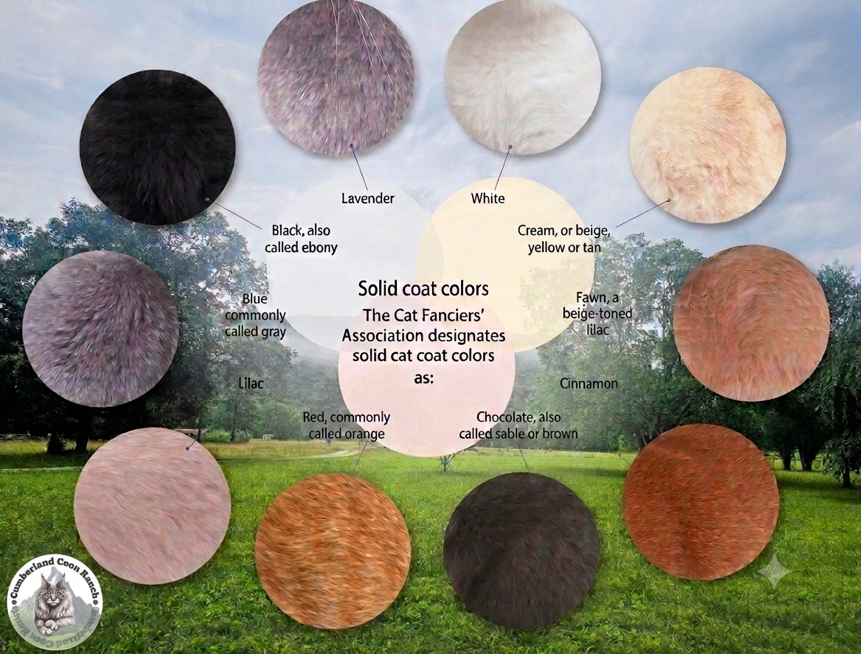
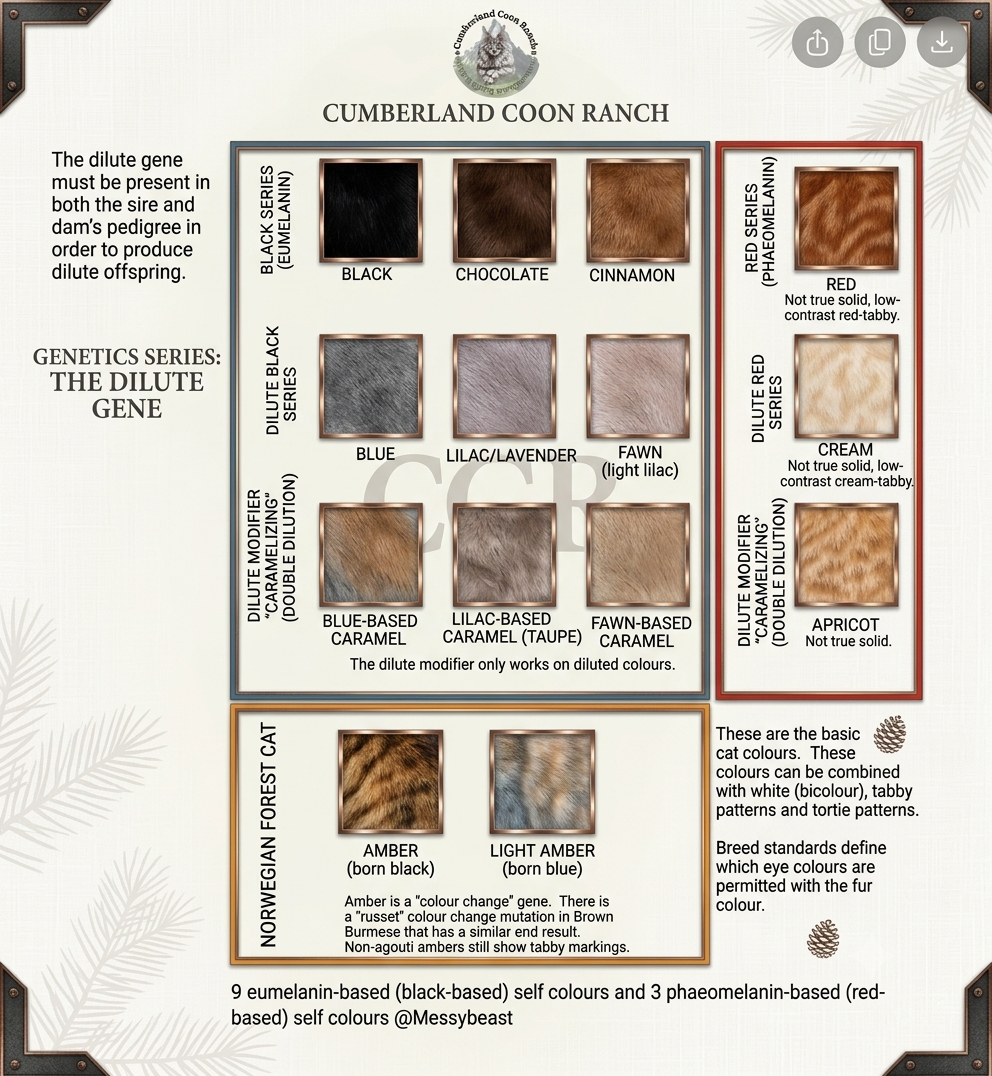
Genetically speaking, there are only four foundational solid colors in the feline world: Black, Chocolate, Cinnamon, and Red. Every other color is a genetic modification or dilution of these four.
The red exception: red (commonly called ginger or orange) is genetically tied to the agouti gene. Because of this, it is functionally impossible to completely eliminate underlying tabby markings on a solid red cat.
Why isn't white a fifth basic color? In feline genetics, white is classified as an absence of color rather than a color itself.
Common solid colors in Maine Coons:
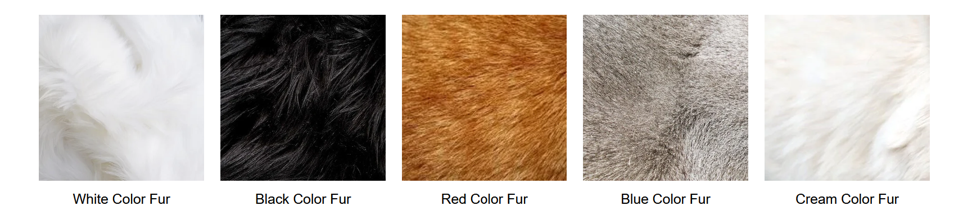
Black: A deep, solid tone.
White: A pure, pristine absence of pigment.
Red: Commonly referred to as ginger or orange.
Blue: A dilute form of black that appears slate grey or silvery.
Cream: A dilute form of red that appears as a soft, pale peach.
The naming confusion: one color, many names
Cat registries, countries, and specific breeds often use wildly different names for the exact same genetic color. Conversely, two colors that look identical to the human eye might be caused by entirely different genetic interactions.
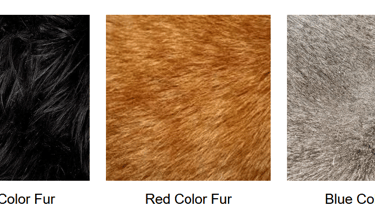
The Many Faces of "Black"
To see how confusing nomenclature can get, look at how the genetic color black is renamed across different breeds and patterns. In the cat fancy, the foundational genetic color black can be incredibly deceptive. Depending on the specific breed, pattern, or registry, a genetically black cat might be called by an entirely different name.
The naming breakdown by breed & pattern
Here is how the exact same "jet-black" gene is labeled across different feline varieties:
Domestic Shorthairs: Called Black in solid cats, but shifts to Brown when describing a classic brown tabby.
Orientals: Referred to as Ebony (or Ebony Tabby).
Abyssinians: Known beautifully as Ruddy.
Ocicats: Designated as Tawny.
Egyptian Maus: Termed Bronze.
Color-Pointed Breeds (e.g., Siamese): Described as Seal.
Burmese: Called Sable or Seal Sepia.
American Tonkinese: Labeled as Cinnamon or Natural Mink.
The Asian Breed (Self Burmese): Holds its own distinct breed name, the Bombay.
Hidden Black Genetics
A cat does not have to look black to be genetically black at its core. The expression of the color changes dramatically when paired with modifying genes:
1. Inhibitor Genes (Silver & Smoke)
Cats like Shaded Silvers, Black Smokes, and Chinchillas may visually appear to be various shades of sparkling silver or light grey. However, they are genetically solid black cats whose roots have been bleached white by the inhibitor gene
2. Dilution Genes (Blue & Caramel)
Add a standard dilution gene to a black cat, and the coat color shifts to a slate grey known as Blue.
Modify that dilution further with specific metallic traits, and it becomes a unique shade called Caramel.
The Takeaway: Whether it looks like a silver shimmering ghost, a dusty slate grey, or a rich brown tabby, the underlying genetic blueprint remains exactly the same—it is still, fundamentally, a black cat.
Cumberland Coon Ranch
Healthy Maine Coons bred with love and care.
Reach us
Contact
(931) 389-4720
© 2025. All rights reserved.